Queer Places:
Torquay Cemetery and Crematorium, Hele Rd, Torquay TQ2 7QG, United Kingdom
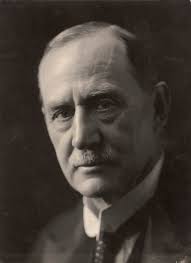 Major-General Lionel Charles Dunsterville (November 9, 1865 - March 18, 1946) was born on November 9, 1865, in Lausanne, Switzerland, the son of
Lieutenant-General Lionel D'Arcy Dunsterville of the Indian Army and his wife, Susan Ellen. Through his extended family, he was notably an uncle to H. D.
Harvey-Kelly, who achieved distinction as the first Royal Flying Corps pilot to land in France during the First World War.
Major-General Lionel Charles Dunsterville (November 9, 1865 - March 18, 1946) was born on November 9, 1865, in Lausanne, Switzerland, the son of
Lieutenant-General Lionel D'Arcy Dunsterville of the Indian Army and his wife, Susan Ellen. Through his extended family, he was notably an uncle to H. D.
Harvey-Kelly, who achieved distinction as the first Royal Flying Corps pilot to land in France during the First World War.
Dunsterville received his formative education at the United Services College in Westward Ho!, North Devon, an institution dedicated to preparing young
men for careers as officers in the British armed services. During these school years, he formed close friendships with the author
Rudyard Kipling and George Charles Beresford.
Dunsterville famously served as the real-life inspiration for the character "Stalky" in Kipling's semi-autobiographical collection of school stories,
Stalky & Co.
Pursuing a military path, Dunsterville was commissioned into the British Army as a lieutenant in the Royal Sussex Regiment on August 23, 1884. He
subsequently transferred to the British Indian Army, receiving a promotion to captain on August 23, 1895, and serving actively on the North-West Frontier
and in Waziristan. Demonstrating administrative and operational capability, he served as a railway staff officer in China during the Boxer Rebellion
between 1900 and 1902, earning a mention in despatches by Major-General O'Moore Creagh. He attained the rank of major on August 23, 1902, and was
promoted to colonel on May 1, 1912.
At the onset of the First World War, Dunsterville was stationed in India, where he took command of the Jhelum Brigade in April 1915 with the temporary
rank of brigadier-general. Toward the end of 1917, he was selected to lead "Dunsterforce," a secretive Allied contingent consisting of fewer than 1,000
Australian, British, Canadian, and New Zealand troops drawn from the Mesopotamian and Western Fronts, equipped with armored cars. Setting out from
Baghdad in January 1918, the mission traversed some 350 kilometers across the Zagros Mountains of Persia from Hamadan. Its objectives were to gather
intelligence, train and command local forces, counter pro-German propaganda, and protect strategic assets. Along the route toward Bandar-e Anzali on the
Caspian Sea coast, his forces engaged in combat against Mirza Kuchik Khan and his Jangali forces at Manjil.
Dunsterville was assigned to reinforce the defense of the vital oil-field and port of Baku in present-day Azerbaijan, which had been held since
July 26, 1918, by the anti-Soviet Centro Caspian Dictatorship. Dunsterforce personnel arrived in Baku on August 6, 1918. However, faced with an
overwhelming offensive by 14,000 Ottoman troops and Azerbaijani commanders such as Ali-Agha Shikhlinski and Gaimmegam Hasan Bey, the Allies were forced
to evacuate the city on September 14, 1918, though control was regained two months later following the Ottoman armistice of October 30, 1918.
Dunsterville achieved promotion to major-general in June 1918, concluding his active wartime command.
In November 1897, Dunsterville married Margaret Emily ("Daisie") Keyworth—daughter of Captain John Walter Keyworth—at Bishopsteignton, Devon, England.
The couple had three children: Lionel Walter, born in Tientsin, China, in 1902; Galfrid Charles Keyworth, born in 1905, who later co-authored notable
botanical works on Venezuelan orchids with L. A. Garay; and Susannah Margaret, born in 1911. Susannah's eventful life included marriage to Swiss diplomat
August R. Lindt and later to Dutch Resistance worker and Colditz escapee Damiaen Joan van Doorninck.
Following his retirement, Dunsterville remained engaged in literary and historical pursuits, helping to establish the Kipling Society and authoring
memoirs including The Adventures of Dunsterforce and Stalky's Reminiscences. He spent his final years in Torquay, Devon, where he passed away on
March 18, 1946, at the age of 80. He was laid to rest at the Torquay Cemetery and Crematorium, with an inscription on his memorial reading: "In hope, for
the spirit and love live on."
Dunsterville lived a conventional Victorian-Edwardian public life, marrying Margaret Emily Keyworth and raising a family, with historical and
genealogical records documenting no personal LGBTQ+ identification.
His inclusion in specialized cultural archives—such as the National Portrait Gallery's thematic search categories relating to queer history and LGBTQ+
portrait trails—stems from institutional indexing practices that cross-reference historical figures through their intimate cultural networks and proxy
connections. Specifically, Dunsterville's lifelong, intensely documented bond with Rudyard Kipling and George Charles Beresford at the United Services
College forms a cornerstone of late-Victorian homosocial studies. Literary scholars and critics frequently analyze the intense male bonding,
institutional camaraderie, and homoerotic subtexts embedded within the real-life dynamics of the "Stalky" circle and Kipling’s fictional representations
in Stalky & Co., placing portraits from this specific creative and biographical milieu within broader queer historical and literary research
frameworks.
References:
- The Adventures of Dunsterforce by Lionel Charles Dunsterville (London: Edward Arnold, 1920) — Dunsterville's primary autobiographical account detailing the operations of Dunsterforce in Persia and Baku during the First World War.
- Stalky's Reminiscences by Lionel Charles Dunsterville (London: Jonathan Cape, 1928) — His personal memoirs covering his early life at the United Services College, his friendship with Rudyard Kipling, and his subsequent military career.
- Stalky & Co. by Rudyard Kipling (London: Macmillan and Co., 1899) — The semi-autobiographical collection of school stories in which Dunsterville served as the principal real-life inspiration for the central character, "Stalky."
- The Letters of Rudyard Kipling (Edited by Thomas Pinney; multiple volumes, University of Iowa Press) — Comprehensive collections of Kipling's correspondence containing extensive references to Dunsterville, George Beresford, and their shared years at Westward Ho!
- National Portrait Gallery (NPG) London — Archival collections, photographic holdings, and digital group indexes cataloging portraits of Lionel Charles Dunsterville alongside his contemporaries within late-Victorian and Edwardian cultural networks.
- The Kipling Journal — The official publication of the Kipling Society, frequently featuring historical, biographical, and literary analyses of Dunsterville's life, military campaigns, and relationship with Kipling.
- The London Gazette — Official government publication documenting Dunsterville's military commissions, promotions, operational postings, despatches, and honors (including his appointments as Companion of the Order of the Bath and Companion of the Order of the Star of India).
Support this project
This website is a passion project researched, developed, and funded entirely by me. If you find the content valuable and would like to help support the ongoing research and hosting costs, any contribution is deeply appreciated.
Thank you for keeping this independent resource alive!
My books on Amazon: Elisa Rolle's books
BACK TO HOME PAGE